Acueducto de Segovia
Acueducto de Segovia · Segovia
Por Spain ·
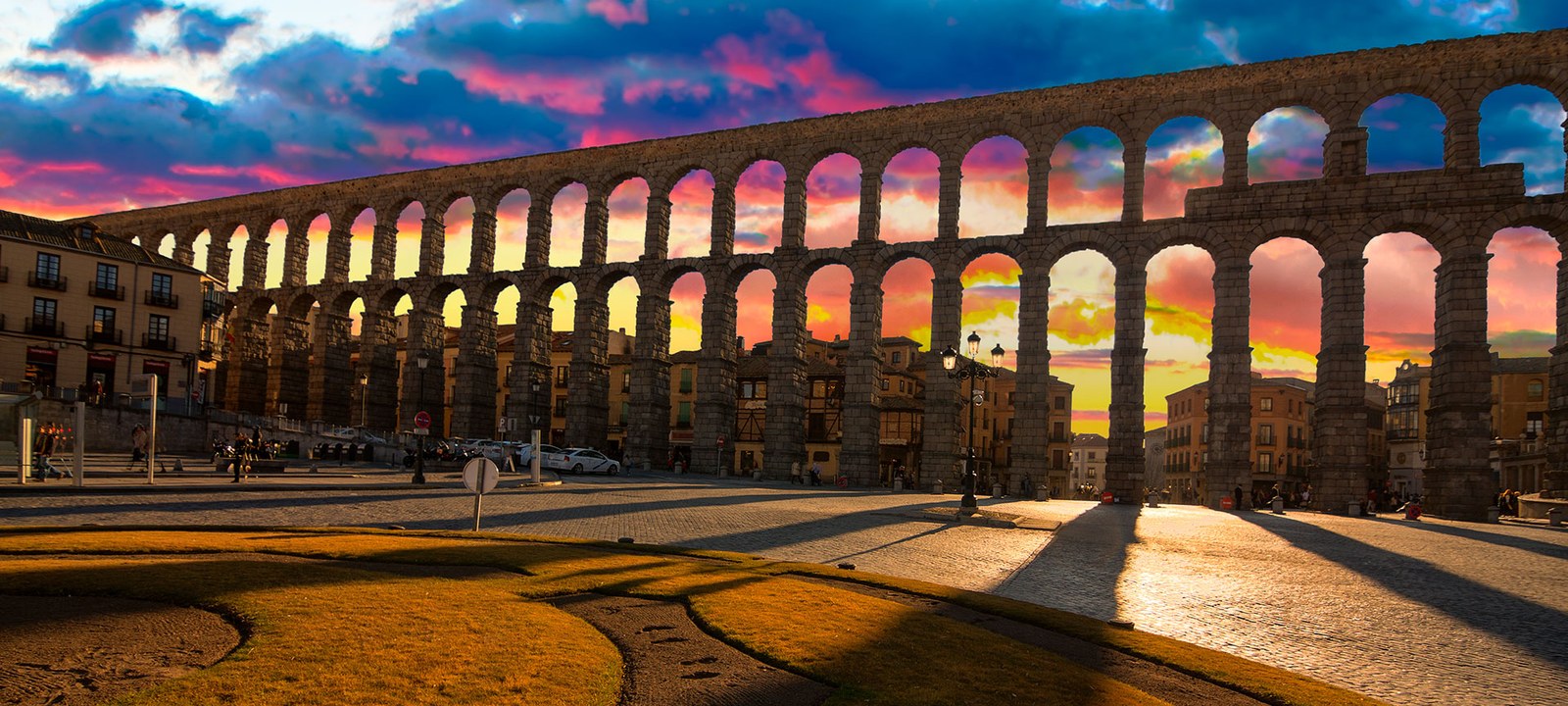
It was probably built during the Flavian period, between the second half of the 1st century and the early 2nd century, during the reigns of the emperors Vespasian and Trajan, with the aim of transporting water from the River Acebeda to the city.
This impressive feat of engineering, which is in an excellent state of preservation, begins near the Palacio de la Granja with simple arches that carry the water to the cistern known as the Caserón.
Subsequently, a channel lined with ashlar blocks carries the water to a second tower, and on reaching the Plaza de Díaz Sanz, two monumental rows of superimposed arches begin to form. Its 20,400 stone blocks are not bound together by mortar or cement of any kind, yet they remain in a perfect and solid balance of forces.
The structure reaches its maximum height at the Plaza del Azoguejo, standing 28.10 metres high and comprising a total of 167 arches.
The Royal Mint of Segovia is home to the Aqueduct Interpretation Centre, a modern interactive and multimedia space which, with water as its central theme, guides visitors along the more than 15 kilometres of the world’s best-preserved Roman aqueduct, tracing the more than 2,000 years of history of this monument, which was designated a UNESCO World Heritage Site in 1985.
More at spain.info
#patrimonio #visitspain
Comentarios
- Carlos: Dos mil años sin argamasa. Y luego cochinillo, claro.
- Jaime Pereira : Siempre impresiona aunque lo hayas visto mil veces.